Overview of Heat exchanger models
This tutorial shows an overview of the different heat exchanger models available in tespy. The table below indicates the different types and how they compare in general. Further down the page we have created a problem, which models the heat exchanger with a variety of the mentioned types and we show the differences in the results.
Overview table
type |
speed |
accuracy* |
internal pinch |
|
|---|---|---|---|---|
SimpleHeatExchanger |
0D |
fastest |
lowest |
no |
HeatExchanger |
0D |
very fast |
lower |
no |
ParallelFlowHeatExchanger |
0D |
very fast |
lower |
no |
Desuperheater |
0D |
very fast |
lower |
no |
Condenser |
0D |
very fast |
low |
(no) |
MovingBoundaryHeatExchanger |
1D |
mid |
high |
yes |
SectionedHeatExchanger |
1D |
slow |
highest |
yes |
Note
The accuracy depends on the context. In many context, the standard 0D heat exchanger components can be just as accurate as the 1D models.
The calculation speed also depends on context for the SectionedHeatExchanger:
The number of specified sections is influencing the speed.
If you impose
td_pinchorUAto your model it will be significantly slower compared to other models, especially with a high number of sections.If you do not specify
td_pinchorUAthe sectioning is only applied once in the postprocessing, this takes more time than other types of heat exchangers but is still relatively fast.
Model comparisons
For the model comparison we have selected a typical problem: the condensation of a working fluid in a heat pump to heat up water. The boundary conditions are listed in the table below.
label |
Specification |
value |
unit |
|---|---|---|---|
c1 |
fluid |
R290 |
1 |
mass flow |
5 |
kg/s |
|
dew line temperature |
60 |
°C |
|
superheating |
50 |
°C |
|
c2 |
subcooling |
5 |
°C |
d1 |
fluid |
water |
1 |
temperature |
45 |
°C |
|
pressure |
1 |
bar |
|
d2 |
temperature |
55 |
°C |
heatexchanger |
pressure drops |
0 |
bar |
Given these boundary conditions, the following results can be obtained:
type |
minimum pinch (K) |
kA (kW/K) |
UA (kW/K) |
|---|---|---|---|
HeatExchanger |
n/a (10.0) |
75.5 |
n/a |
Condenser |
n/a (5.0) |
276.1 |
n/a |
MovingBoundaryHeatExchanger |
8.08 |
75.5 |
149.4 |
SectionedHeatExchanger (50) |
8.20 |
75.5 |
150.0 |
SectionedHeatExchanger (6) |
8.33 |
75.5 |
150.7 |
Attention
Keep in mind: under different boundary conditions (e.g. no phase change) results of this comparison may vary a lot. There might be conditions, where the 0D components yield very similar results, or where deviation is even higher.
For the calculation of the results the following equations apply:
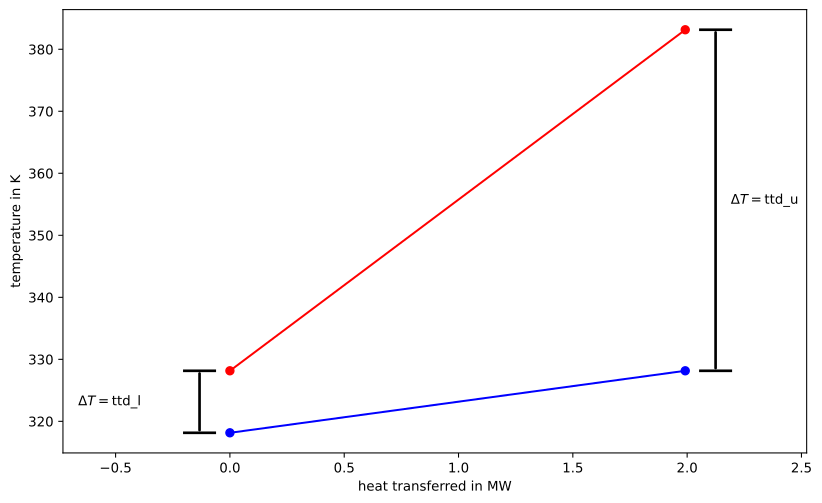
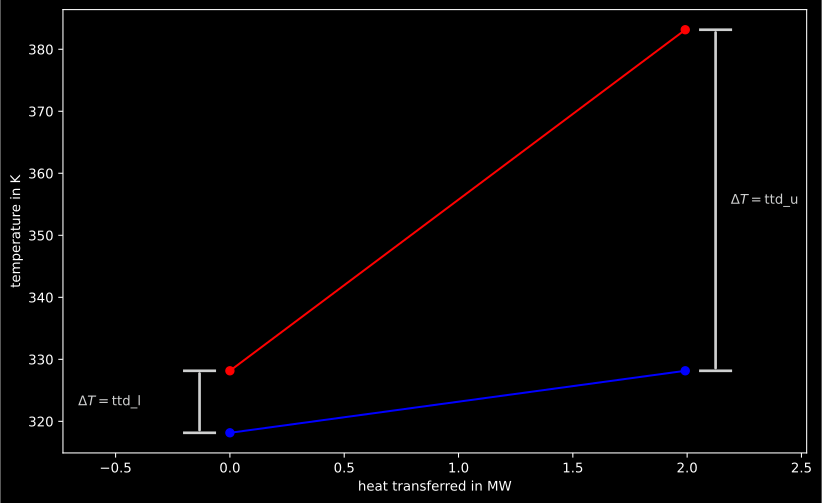
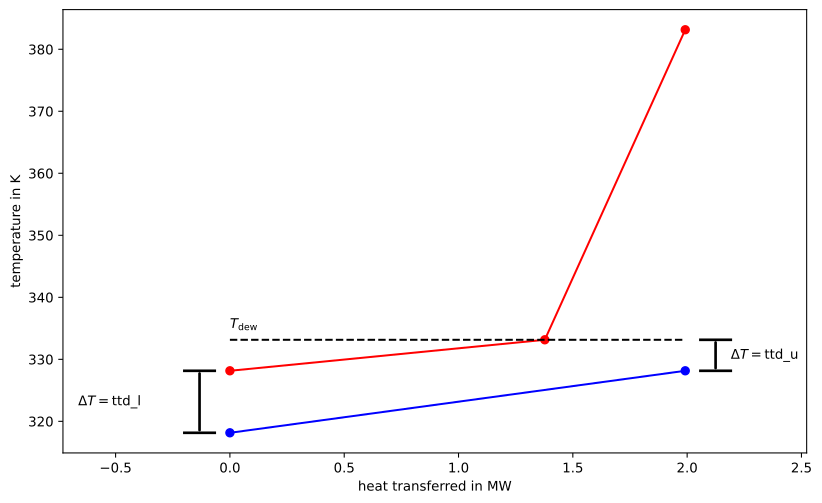
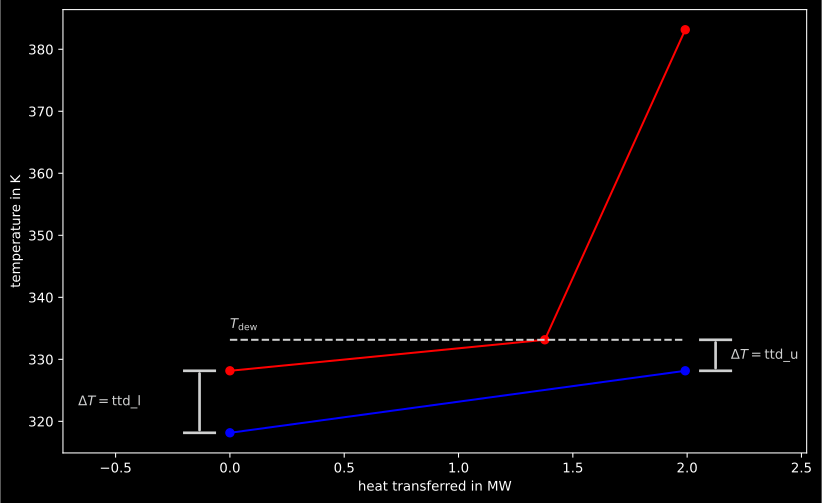
For the calculation of \(kA\) the terminal temperature differences
ttd_u and ttd_l are considered as the \(\Delta T_0\) and
\(\Delta T_1\). For the calculation of UA, the internal temperature
differences \(\Delta T_{i}\) are employed as highlighted in the figures
below.
We have created QT graphs to visualize the reason for the differences.
HeatExchanger
QT diagram for HeatExchanger class
QT diagram for HeatExchanger class
Condenser
In the condenser the upper terminal temperature differences is assigned to the temperature differences between the dew line temperature of the condensing fluid and the outlet temperature of the cold fluid.
QT diagram for HeatExchanger class
QT diagram for HeatExchanger class
MovingBoundaryHeatExchanger
The moving boundary model sections the heat exchange into three different sections at the phase change points.
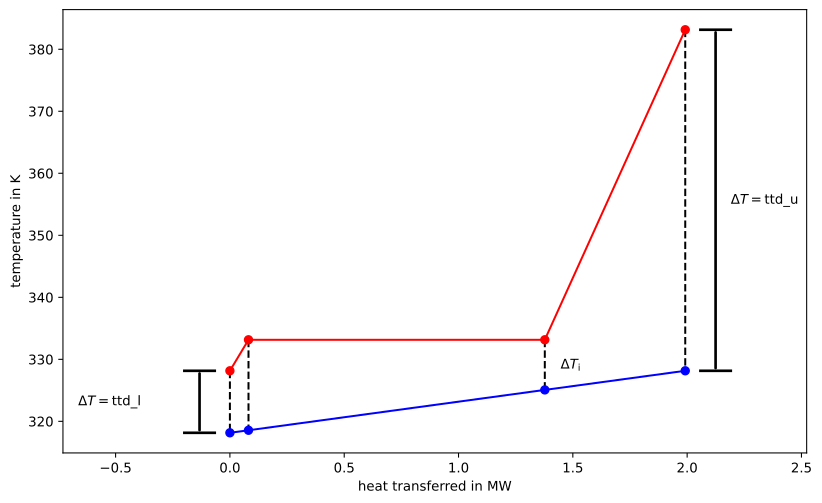
QT diagram for MovingBoundaryHeatExchanger class
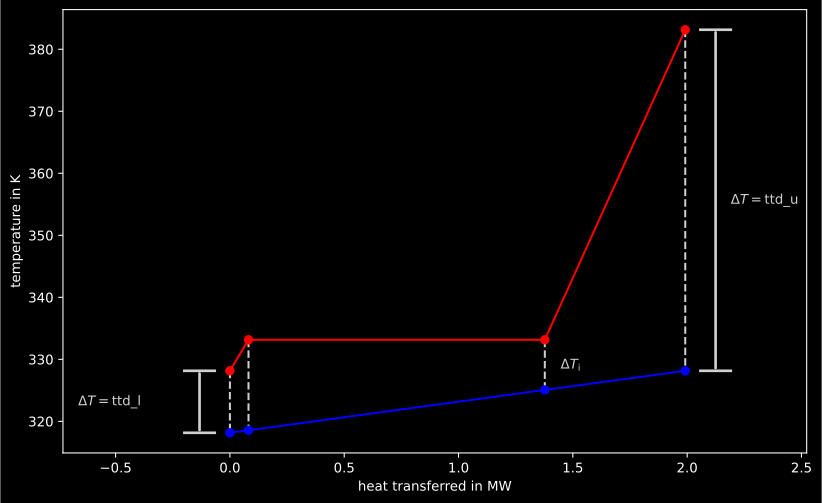
QT diagram for MovingBoundaryHeatExchanger class
SectionedHeatExchanger
The sectioned model sections the heat exchange into 50 sections by default and extra sections are inserted at the moving boundaries (note the smaller sections in between).
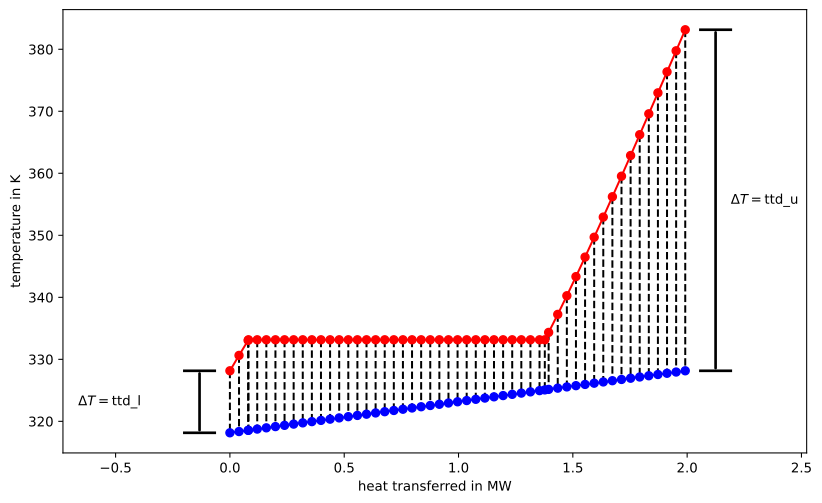
QT diagram for SectionedHeatExchanger class
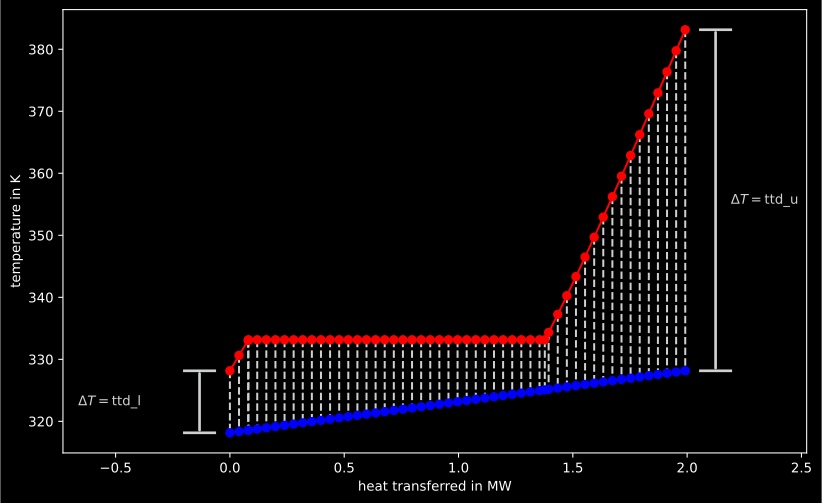
QT diagram for SectionedHeatExchanger class
MovingBoundary and Sectioned models
Comparing these two models, we see almost identical results in the cases shown above. However, this is not necessarily the case. There are situations, where these models may yield slightly different results. This is specifically the case when there is a curvature in the isobars (e.g. supercritical conditions near critical point) or when there is a pressure drop in a pure liquid phase nearing the two-phase region.
First, we have a look at different comparisons of the two models, where the performance is very similar:
Comparing different number of sections
The following graph shows the comparison of a MovingBoundaryHeatExchanger and a SectionedHeatExchanger. There is a very small difference in the desuperheating section.
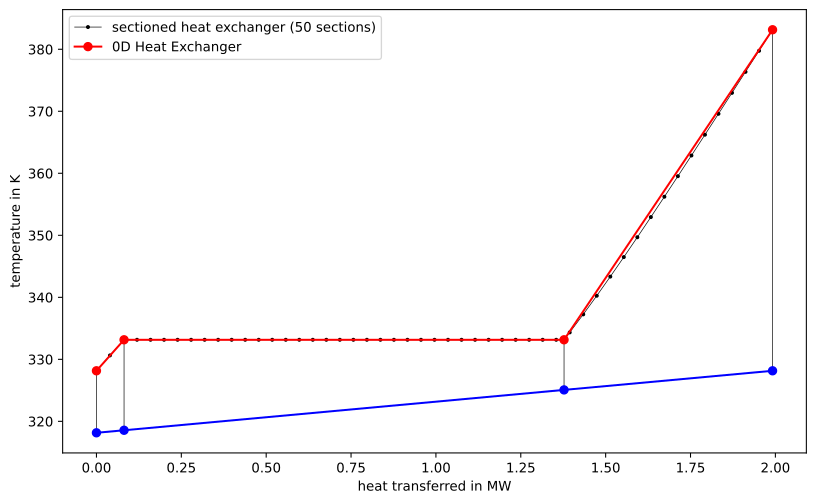
QT diagram comparison for SectionedHeatExchanger and MovingBoundaryHeatExchanger classes
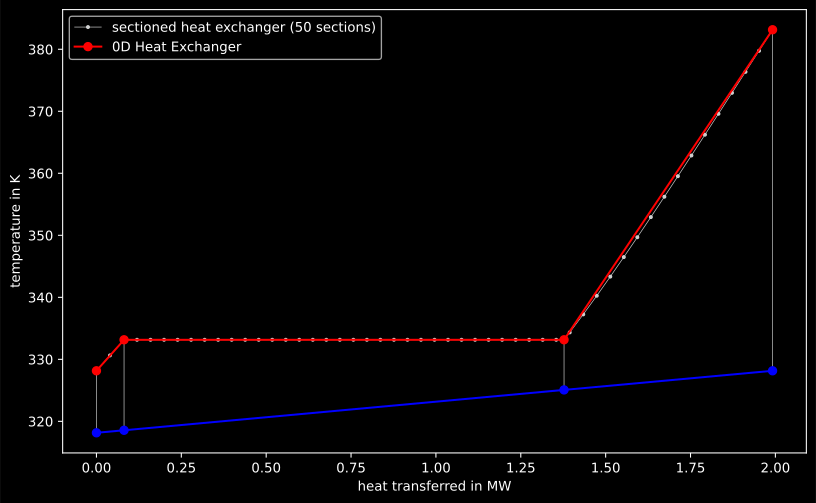
QT diagram comparison for SectionedHeatExchanger and MovingBoundaryHeatExchanger classes
And two sectioned models with different number of sections, where we can see that already with a few sections we can yield quite good results.
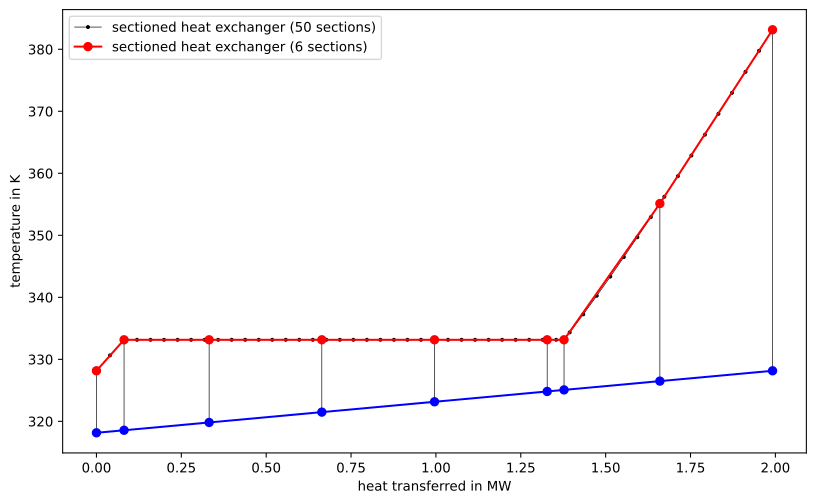
QT diagram comparison for SectionedHeatExchanger with different numbers of sections
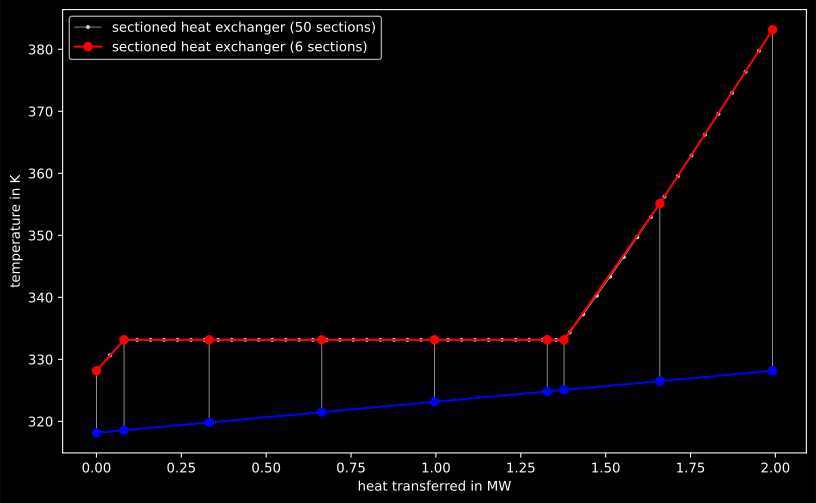
QT diagram comparison for SectionedHeatExchanger with different numbers of sections
Considering pressure drop
Since both type of models can consider pressure drop (in the same way), they match quite well again.
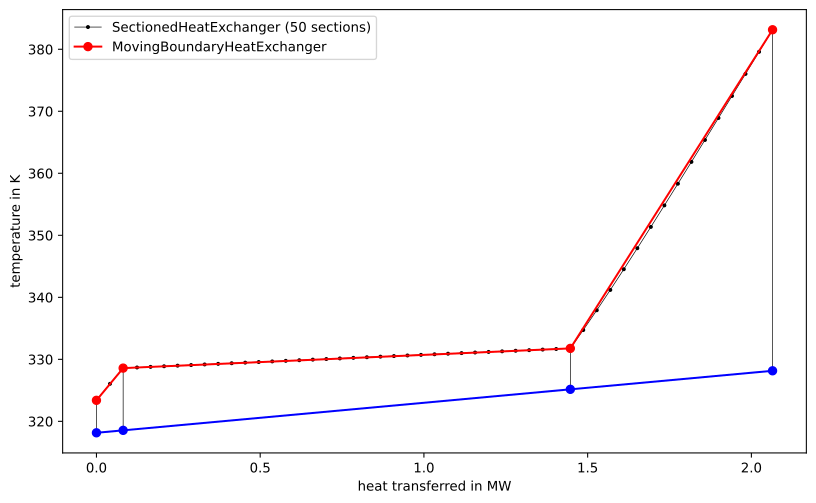
QT diagram comparison for SectionedHeatExchanger with MovingBoundaryHeatExchanger considering pressure drop
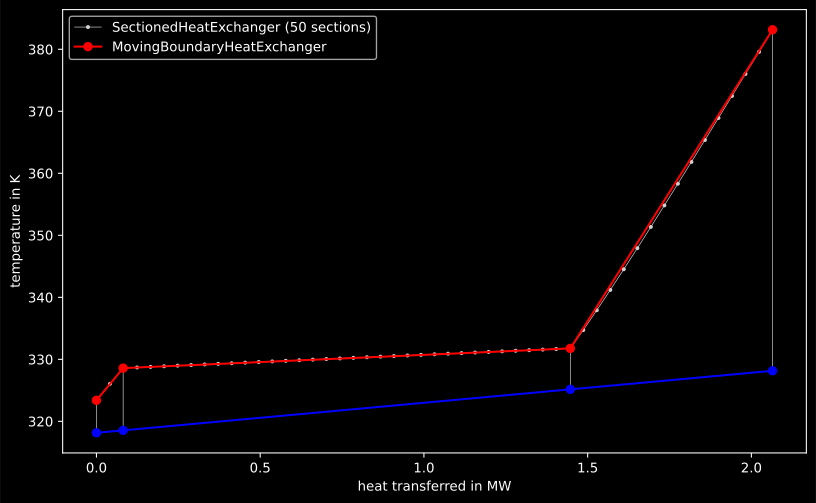
QT diagram comparison for SectionedHeatExchanger with MovingBoundaryHeatExchanger considering pressure drop
Comparing the two again in a different situation: We preheat the working fluid with a relatively high pressure drop towards saturation. The difference shows on the secondary side (blue line).
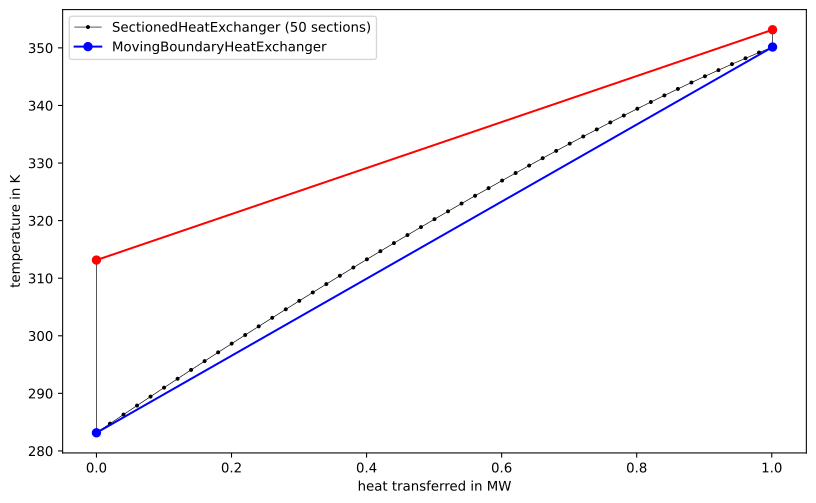
QT diagram comparison for SectionedHeatExchanger with MovingBoundaryHeatExchanger considering high pressure drop
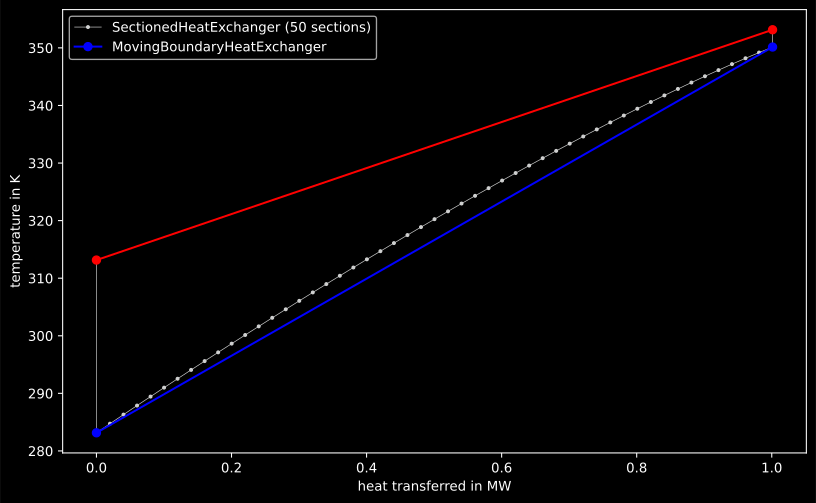
QT diagram comparison for SectionedHeatExchanger with MovingBoundaryHeatExchanger considering high pressure drop
Curvature of isobars
Very similar to the previous comparison, in supercritical region the sectioning is quite important.
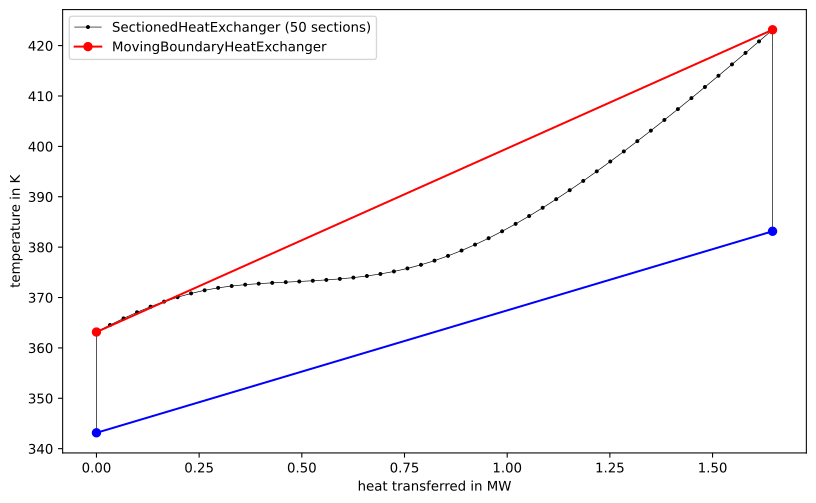
QT diagram comparison for SectionedHeatExchanger with MovingBoundaryHeatExchanger when supercritical near critical point
QT diagram comparison for SectionedHeatExchanger with MovingBoundaryHeatExchanger when supercritical near critical point